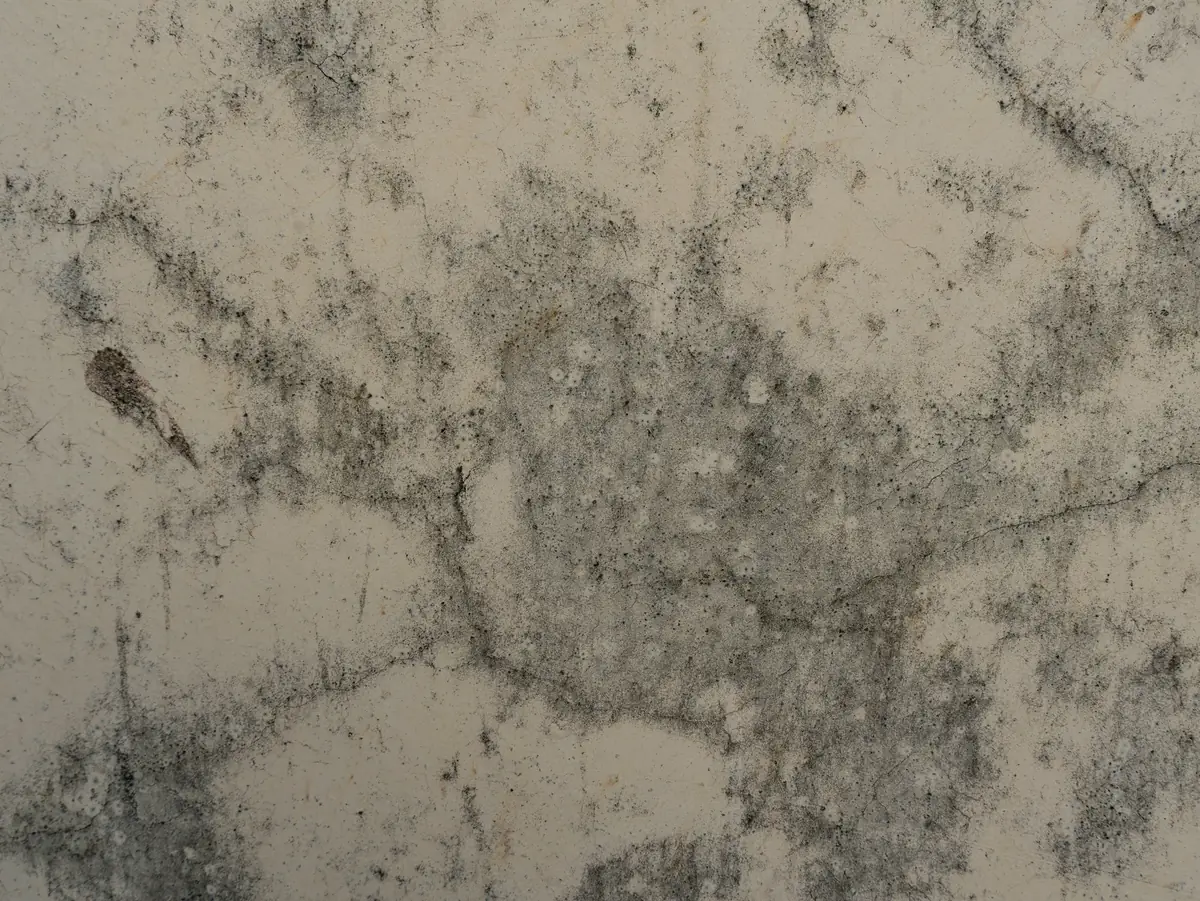
Black mold, plainly
"Black mold" usually means Stachybotrys, a greenish-black mold that grows on drywall and wood that stay wet for a long time. But plenty of harmless-looking mold is black, and plenty of trouble is white or green. Color is not the test. Size and moisture are.
On this page
What the color tells you
Less than people think. Many common molds are dark: the spots on a shower's grout, the specks on an AC vent, the bloom on a closet wall. The CDC puts it bluntly: you do not need to know the type of mold, and no matter what type is present, you need to remove it. It also does not recommend mold testing.
The kind people worry about, Stachybotrys chartarum, needs material that stays wet for days or weeks: drywall after a slow leak, the paper face behind a vanity, ceiling drywall under a roof leak. If you have that, you have a water problem that has gone on a while, and that matters more than the name.
Health
The CDC lists a stuffy nose, sore throat, coughing or wheezing, burning eyes or a skin rash as reactions some people have, says people with asthma or mold allergies can react more severely, and says immune-compromised people and people with chronic lung disease may get lung infections from mold. If anyone in the house fits that description, say so when you ask for help, and keep them away from the work area during cleanup.
Do you need a test?
If you can see it, usually not. The Florida Department of Health advises against testing to find out whether you have a mold problem, and doesn't test homes itself. Testing is worth paying for when you smell mold but can't find it, or to check a finished job. Mold inspection and testing.
Cleaning it yourself, or not
Under about 10 square feet on a hard surface, the EPA says most people can clean it: detergent and water, scrub, dry, and wear gloves, goggles and an N95. Drywall with growth through it, or a patch bigger than that, is a removal job, and in Florida that work for pay takes a licensed mold remediator. Cleaning mold yourself.
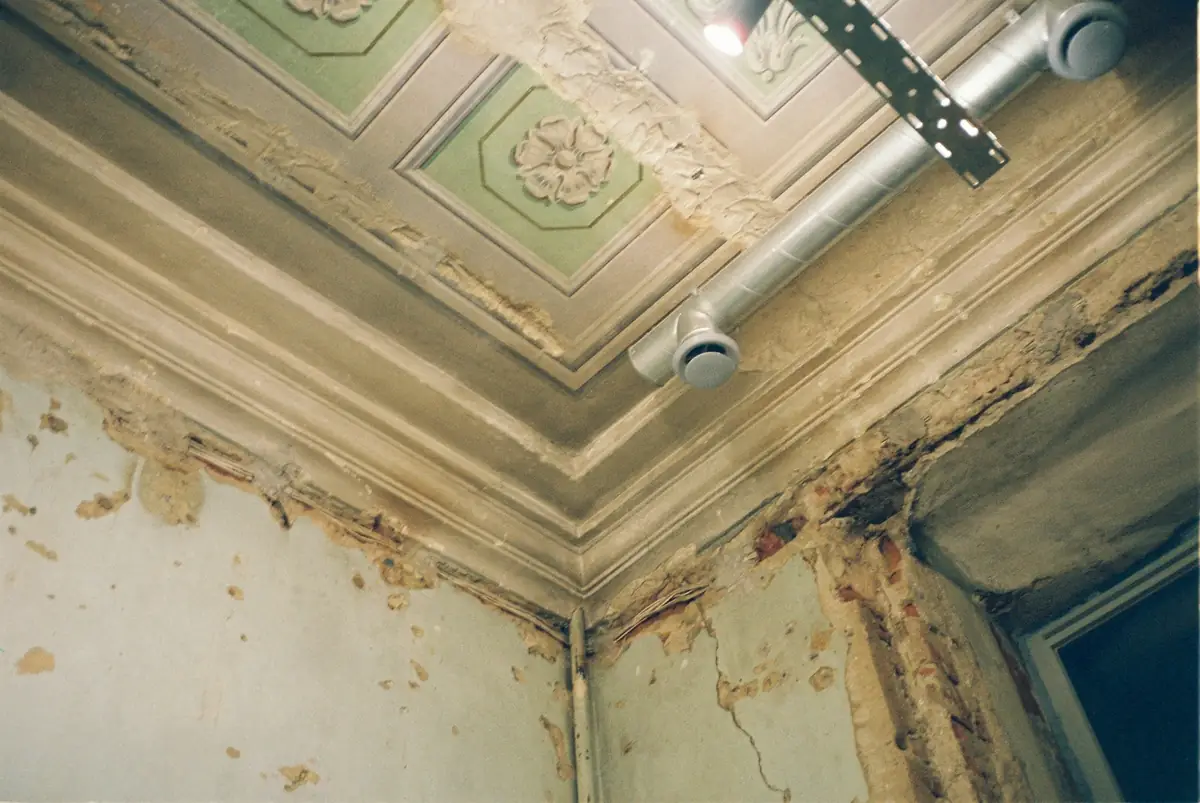
The Orlando version
Here black mold most often shows up in three places: the ceiling under an attic air handler whose drain clogged, the wall behind a water heater or washer in the garage, and the inside wall of a closet on the shady side of the house. All three are slow water. Fix that, then remove the material.
Questions Orlando homeowners ask
Is black mold dangerous?
For some people, the CDC says, mold causes a stuffy nose, sore throat, coughing or wheezing, burning eyes or a skin rash, and people with asthma, mold allergies or weakened immune systems can react more seriously. Whatever the type, the CDC says to remove it.
How do I know if it's black mold?
Only a lab can say which species it is, and the CDC says you do not need to know the type to deal with it. What matters is how big the area is and why it's wet.
Should I move out because of black mold?
Usually not for a small, contained area. For a large area, or someone in the home with asthma or a weakened immune system, it may be wise to stay elsewhere while it's removed. Ask a doctor about health concerns.